

Choosing the right trekking poles can truly make a difference on your hikes. Here are some practical tips to find the perfect pair for your needs!
Trekking poles (or walking poles) are essential for improving balance and reducing impact on your knees and hips during hikes. They help maintain muscle function and can significantly lessen post-hike soreness. Moreover, having a pole on an outing is always handy, whether for crossing a stream, lending a hand to a companion in need… or even keeping a shepherd dog at bay!
How many trekking poles do you need?
Since we have two legs, it’s only logical to carry two trekking poles – your knees will certainly thank you! Two poles also provide greater stability when crossing rivers or traversing ice and snow. A single pole is ideal for shorter hikes on easy terrain.
In any case, if you often use your hands to climb a slope and plan to use the wrist strap to carry your trekking poles, then bringing just one might be useful. However, it’s generally better to purchase a pair in case you change your mind and decide to use both, as finding a matching second pole later can be challenging.
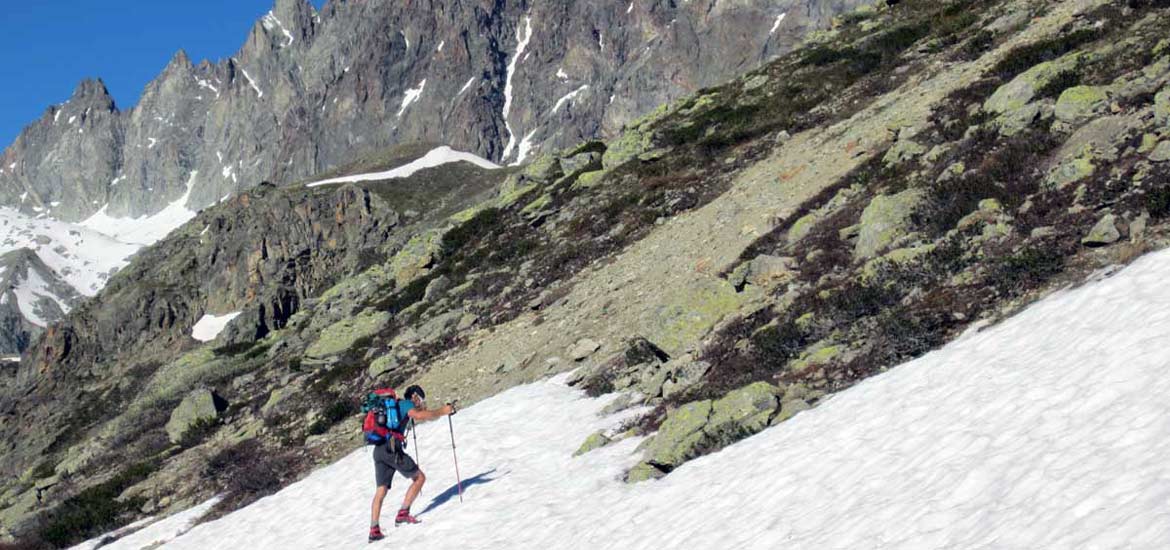
Adjustable trekking poles
Most trekking poles have adjustable lengths, allowing you to shorten them for easy transport in a car trunk or when strapped to your backpack. When choosing your poles, it's important to consider both their maximum and minimum lengths.
Maximum length
Taller individuals (190 cm or more) should select poles with a maximum length of at least 135 cm. Those 180 cm or shorter will have a broader selection, finding many poles that can be adjusted to the appropriate length.
Remember that you can change the length depending on the terrain's gradient.
Minimum length
Almost all trekking poles can be shortened to take up less space. If you often carry them strapped to the outside of your backpack, make sure they collapse significantly, ideally to 70 centimeters or less.
Adjustment mechanisms
There are two types of adjustable trekking poles: those with lever locks or twist locks. We recommend those with lever locks because they tend to be more durable.
Anti-shock trekking poles
If you have sensitive knees or wrists (or want to prevent issues), consider the option of anti-shock poles. The spring mechanism in each pole absorbs some impact and shock during steep descents.
The downside is that they are significantly heavier than standard poles, so choosing between the two depends on your personal preference. Make sure to try out poles before purchasing, as some hikers swear by anti-shock poles, while others feel they make no difference at all.
Cork grips
If your hands tend to sweat a lot, consider trekking poles with cork grips. They are less slippery than synthetic options and, due to the material, are lighter, which can be significant on a long hike.
Additionally, they mold to the shape of your palm with use. Rubber grips are more durable and repel water, making them perfect for outings in adverse conditions and climbs. Some hikers, however, dislike the constant friction from rubber, so consider your hand sensitivity. Foam grips become slick and slippery in humid conditions but are very comfortable to use in a dry environment.
Trekking poles with ergonomic grips
An ergonomic grip is one that is angled forward and shaped to fit the palm of your hand perfectly. While not strictly necessary for a trekking pole, these features certainly make it easier and more comfortable to hold.
Wrist straps
Wrist straps allow you to slightly relax your grip and transfer some pressure to your arm, which can truly make a difference on long hikes. All wrist straps should be adjustable. Padded straps can be comfortable for extended excursions.
Furthermore, the ability to let the poles hang from your wrists allows you to tackle particularly steep ascents by using your upper limbs for assistance.
Weight
For long-duration hikes, the lighter the poles, the better. Generally, 300 grams or less per pole should be suitable. Carbon trekking poles are lighter and strong, but they aren't very durable and can dent easily.
Aluminum is heavier, but not excessively so, and will very likely withstand more wear than carbon.
Baskets
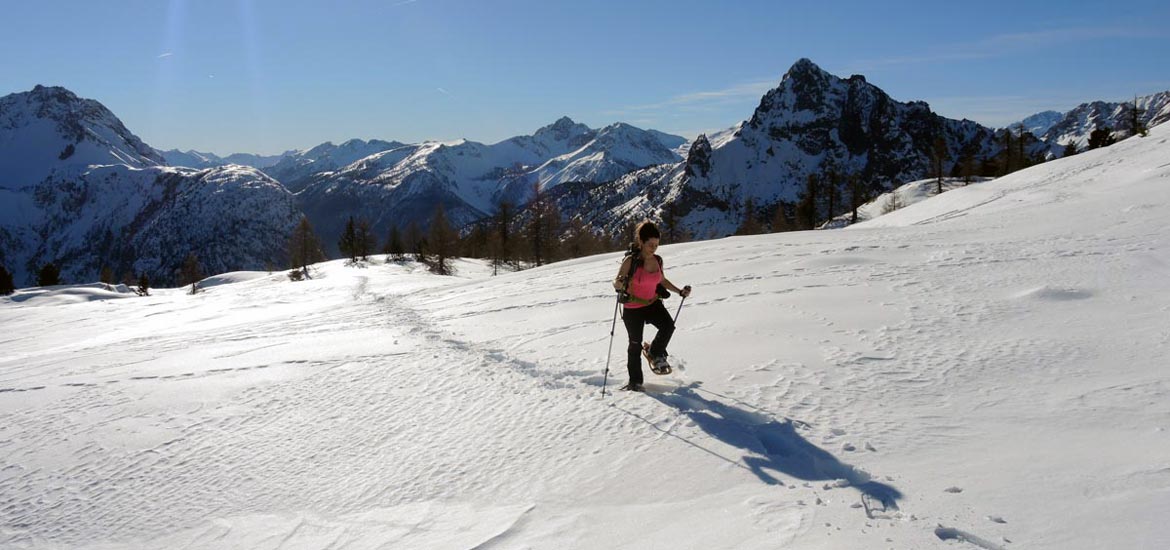
Baskets are the round parts at the end of your poles. It's best to choose trekking poles with large baskets (at least 7 centimeters in diameter) if you'll be hiking in snow. For non-winter outings, smaller baskets are certainly less cumbersome.
You might find new baskets that fit your poles, but it's advisable to take them to a store to ensure all parts work well together.
Alternatively, you can simply purchase snow baskets or smaller ones and change them according to the season.




Travel, excursions, activities, and outdoor experiences in italy and around the world
Via Argentero 6, 10126 Turin
+39 011 089 1022
info@verticalife.it
